


The Research Centre for Palliative Care, Death and Dying (RePaDD) works to improve care experiences for people receiving palliative and end-of-life care by examining the issues faced by people living with life-limiting illness, their carers, and the health and care professionals supporting them.
Drawing on extensive project experience, our carer-related research provides evidence-based information, tools, and resources to support carer health and wellbeing.
Our evidence brief (568kb pdf) outlines several RePaDD carer-focused projects and highlights the Centre’s contributions to this important area.
Building on this work, our 2-page research summary what unpaid carers need when end-of-life and palliative care are part of caring (496kb pdf) shares insights from a national roundtable hosted by RePaDD, exploring what unpaid carers need when palliative and end-of-life care form part of their caring role. It captures the perspectives of carers, advocates, policy makers, researchers, and health professionals, highlighting priority areas and opportunities for system improvement.
Most recently, RePaDD has released a summary report from the Unpaid Carers Research Roundtable and Focus Group. This report outlines discussions where researchers, carers, advocacy organisations, policymakers, and practitioners identified priority areas for a national collaborative research agenda. It provides an overview of current RePaDD studies, key themes raised by participants, and shared visions for strengthening research to better support unpaid carers.

RePaDD convened a national roundtable to explore how upcoming aged care reforms will shape palliative and end-of-life care for older Australians. This report (3MB pdf) outlines key issues identified by sector leaders, including the impact of the new Aged Care Act and Support at Home Program, the need for clearer end-of-life pathways, stronger interfaces between health and aged care, and better support for the allied health workforce. The report provides timely insights to help organisations and practitioners navigate reform and strengthen care for older people across ageing, decline, and end of life.
This short summary resource (574kb pdf) outlines key themes and priorities identified through the round table discussions, including the need to build workforce capability, recognise the vital role of allied health, support older people to live and die at home where possible, and strengthen coordination between primary, acute, and aged care.

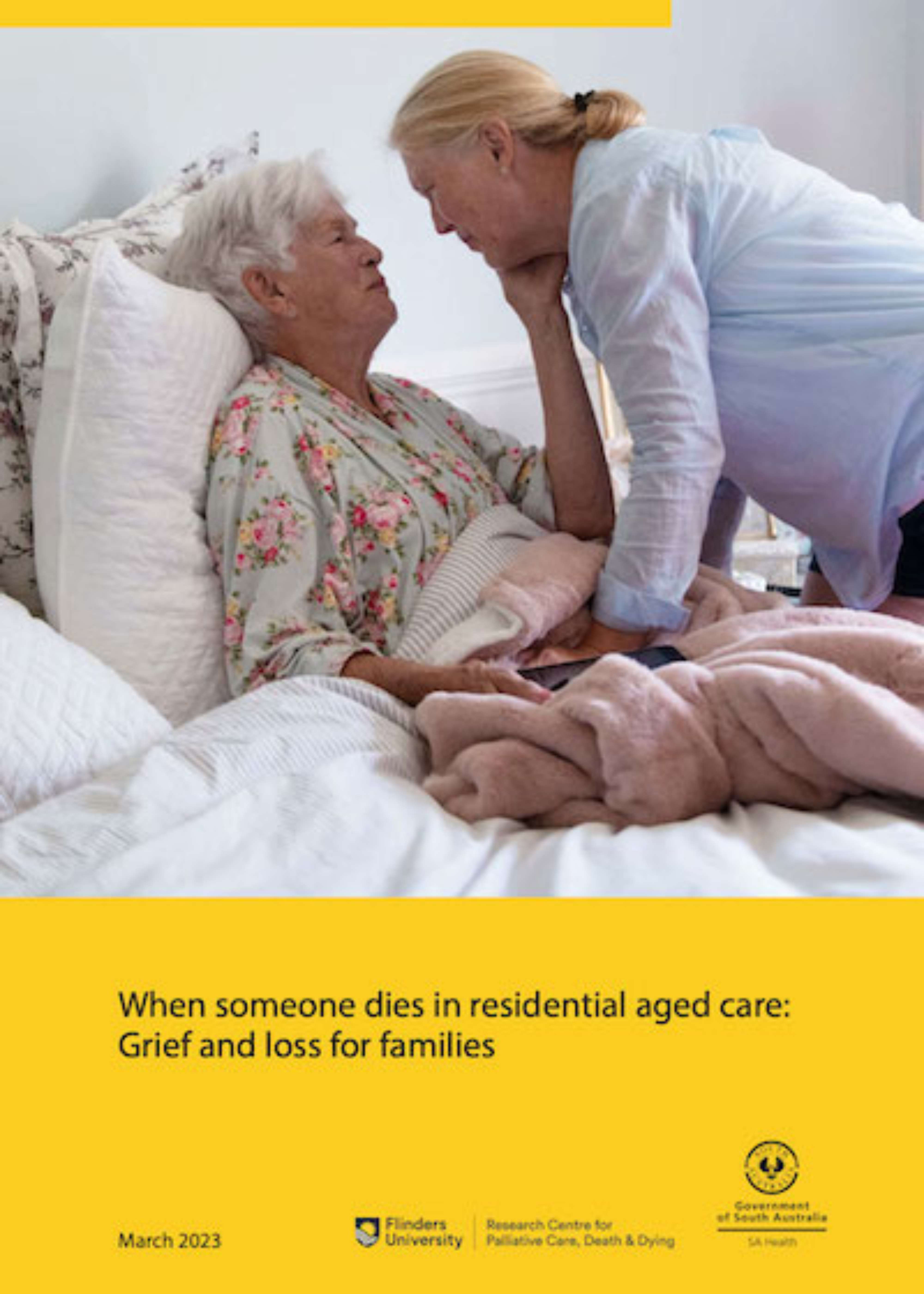
Following a grant from SA Health to conduct research, RePadd has developed and updated an evidence-based booklet (6MB pdf) to support the management of grief and bereavement.
Almost a third of deaths in South Australia occur in residential aged care facilities. For families, the move into residential aged care can cause sadness and worry. Most residents will continue to live in the facility until their death.
This booklet supports bereaved people by providing information on what is likely to happen over time from entry into aged care through to the end of life. Shaped by evidence from Australian and international studies of residential aged care, it includes suggestions, practical resources, and supports for families.
Free printed copies are available for aged care services around Australia.
To order, please email us:
- The number of booklets required
- Your organisation's postal address
- Your full name and email address
As a new researcher it can be challenging to understand all the different aspects of research and how to design, conduct and share the findings of your research study. This new section provides information on how to get started in palliative care research.

Access to research literature supports guidance, development and evidence-based practice. RePaDD provides you with shortcuts to quality literature using our search tools.
A resource for finding PubMed articles on the conduct of research.
Resource for researchers to provide rapid COVID19 retrieval within PubMed.


Sturt Rd, Bedford Park
South Australia 5042
South Australia | Northern Territory
Global | Online
Follow Flinders