Available in Year 1
Topics in your first year
- Foundations for Social Work Practice
- Social Work in Statutory Settings
- Culture, Intersectionality and Social Work Practice
- Working Alongside First Nations Communities
Looking for a career with purpose? This accredited masters degree helps graduates with a background in social and behavioural sciences become qualified social workers in two years.
You’ll develop the knowledge and practical skills to support people through complex life challenges, advocate for social change and work across diverse communities. With 1000 hours of professional placements built into the degree, you’ll graduate confident and ready to work in a wide range of careers across fields such as health, mental health, disability, family services and community development.
Take the next step towards a career in social work. You’ll explore social work practice with diverse communities and develop skills in areas including mental health, child and family services, trauma and resilience, social policy and advocacy. Through practical learning, you’ll put your knowledge into practice, build professional experience and develop the skills needed to respond to complex situations with confidence.
Build from foundations to advanced practice through coursework and supervised placements. Study full-time over two years with a structured schedule, combining online learning with in-person intensives. Placements are completed in blocks, so you can plan ahead and balance study with work and other commitments.

Topics in your first year

The Master of Social Work - Graduate Entry at Flinders University is an Australian Association of Social Workers (AASW) accredited program. This is an entry qualification into the social work profession and has been determined to meet the Australian Social Work Education and Accreditation Standards.
Demand for qualified social workers continues to grow, driven by increased need for mental health, family and community services. Employment for social workers is projected to grow by 25.3% by 2036*, with employers seeking accredited graduates across health, child protection and community-based settings.
You could be a
Expected salary
$95,000 - $115,000*

Expected salary
$100,000*

Expected salary
$110,000*
Expected salary
$98,000*

Expected salary
$95,000*
You could be a
Expected salary
$95,000 - $115,000*
Expected salary
$100,000*
Expected salary
$110,000*
Expected salary
$98,000*
Expected salary
$95,000*
*Typical salaries are drawn from a variety of sources, including Seek, Glassdoor and Indeed, and may vary. Please do your own research.
Connect with industry through practical experience placements. Gain hands-on experience with 1,000 hours of supervised field placements in real-world settings, building your skills, confidence and professional network as you prepare for a rewarding social work career.
Throughout your studies, you'll gain practical experience preparing you for an exciting career:
Prior to your first placement, you will be required to provide the following:
Please note that eligibility for placement is critical to progressing through this degree.
You could be eligible for the Commonwealth Prac Placement - up to $331.65 per week.*
Begins July 2025 | Teaching, Social Work, Nursing and Midwifery
*Terms and conditions and eligibility criteria apply
The Graduate Certificate in Society and the Individual can provide a pathway into the Master of Social Work - Graduate Entry if your previous degree does not meet the social and behavioural sciences entry requirements.
See Entry requirements for further information.
Where world-class education meets laid-back coastal living. With pristine beaches, acclaimed wineries, and vibrant festivals at your doorstep, South Australia offers an unmatched student experience.
Photo credit: SATC
Our incredible teaching and professional staff are experts in their fields and well-connected to the industry.

Professor
Kathomi Gatwiri
Teaching Program Director
Professor Kathomi Gatwiri is Professor and Head of Social Work at Flinders University, with expertise in decolonising methodologies, anti-racist practice and culturally safe social work. Her research explores racial trauma, identity and the experiences of minoritised communities. Kathomi is also an award-winning researcher and community leader, with extensive experience in research, teaching and social work.
Associate Professor
Paula Redpath
Course Coordinator Master of Social Work
Paula Redpath is an Associate Professor, psychotherapist and Accredited Mental Health Social Worker at Flinders University. Her work focuses on mental health, evidence-informed practice, workforce development and clinical education. With extensive experience across practice, research and teaching, Paula brings a strong focus on preparing social work graduates for contemporary professional practice.
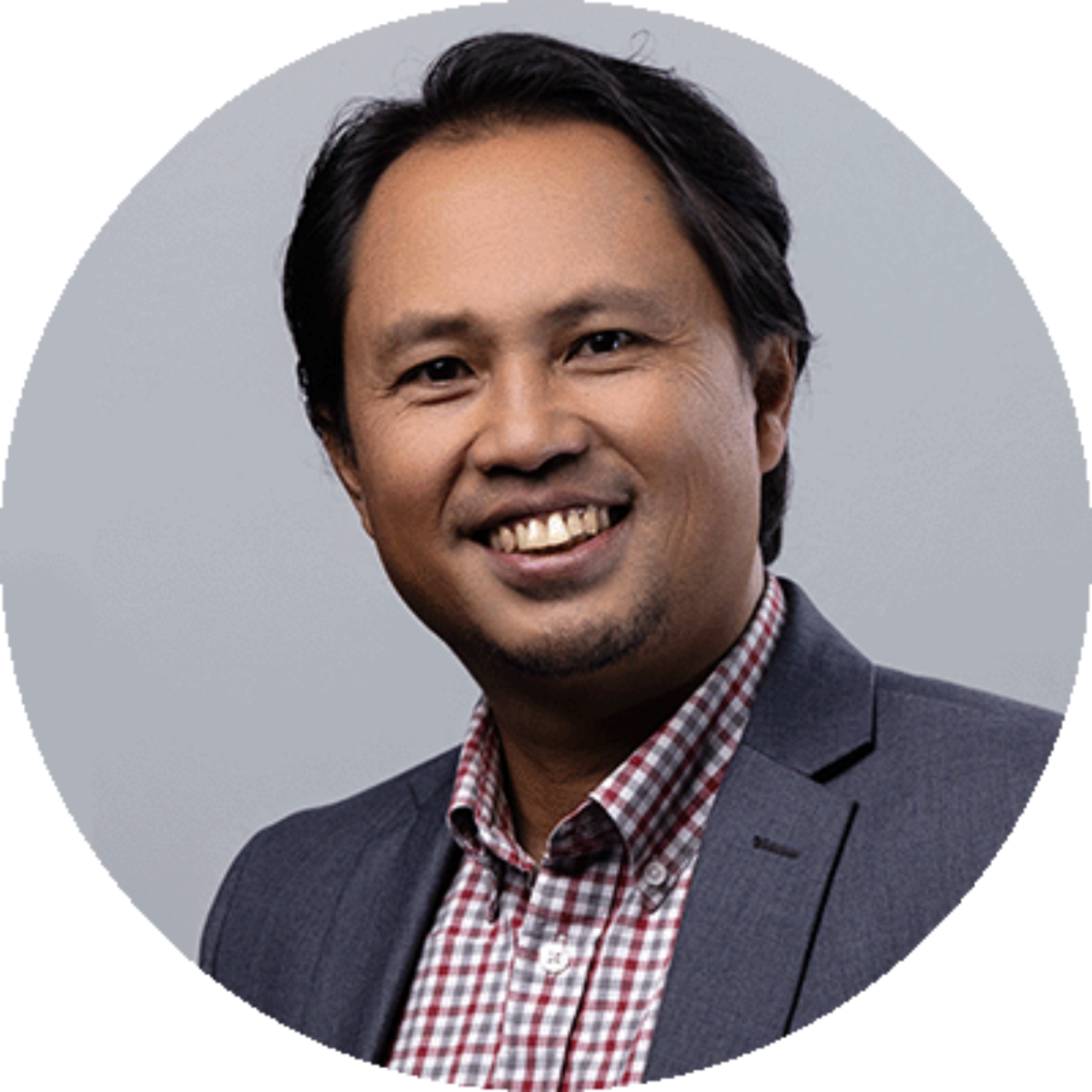
Tufel
Musyadad
Deputy Course Coordinator Master of Social Work
Tufel Musyadad is an Associate Lecturer in Social Work and Deputy Course Coordinator for the Master of Social Work at Flinders University. With more than 17 years’ experience across social work, higher education, international development and community services, Tufel brings expertise in mental health, case management, field education and culturally responsive practice.
Discover more about Flinders University’s Social Work program.
Why Study Social Work
Discover why social work is such a rewarding and in-demand profession, and how Flinders University supports students through hands-on learning, real-world placements, and approachable teaching.
Meet the Social Work Lecturers
Meet the passionate teaching team behind Flinders University’s Social Work degrees as they share what inspires them, their lived experience, and how they support students to become confident, career-ready social workers.
Master of Social Work
Flinders offers comprehensive practical experiences, preparing students for professional social work practice.

Social work gives me the opportunity to address issues of social equality and advocate for human rights and social justice.

Master of Social Work
Flinders offers comprehensive practical experiences, preparing students for professional social work practice.
Social work gives me the opportunity to address issues of social equality and advocate for human rights and social justice.
Career growth - Build confidence with practical, in-demand skills.
International Student Services (ISS) is the first point of contact for international student support. The university also offers everything from cultural, health, and wellbeing services, to academic support.
Take a virtual tour of our campuses, guided by your fellow international students.
Flinders University Student Association (FUSA) is the heart of the Flinders Experience. FUSA is where you'll find out about events, club memberships, and extracurricular activities.
Adelaide has many accommodation options for international students. You can choose to live on campus, at our city accommodation provider The Switch, or in rental accommodation.
From course advice, recognition of prior learning assessments, to study skills and financial support, we’re here to help.
Connect with Flinders alumni and industry partners through discipline-specific networks, seminars, and career events designed for postgraduate students.
Flinders’ campuses are hubs of activity, with library spaces, study and chill areas, ample parking and more.
Find the answers to some of our most frequently asked questions.
Placements are an integral part of the social work program and an essential requirement for accreditation. Students are expected to engage in 2 placements totalling 1000 hours across the degree.
Host partners are key industry stakeholders and span health, social and community, education, research, child protection, mental health and policy.
All host partners interview before offering a placement so it is important that students prepare, practice and present themselves as confidently and professionally as possible. Dressing in a professional way and providing good responses about models, theories and frameworks in social work is a sound start. Be clear why you want to undertake placement with the host, learn about their programs, and other relevant information beforehand.
Students must ensure they meet all of the pre-compliance checks and requirements before a placement can be allocated.
Placements are a very large commitment and students attend 4 days a week for 18–20 weeks.
Placements are not just about the hours. They provide learning, development and supervision to support professional standards and practice development to become a social worker in Australia.
Students already working in the sector may be eligible for a work-based placement and can find more information on the social work placement page.
Placements are demanding, diverse and dynamic experiences that provide students with real world learning environments. High standards of professionalism, conduct and punctuality are essential and good self-management skills support students to succeed. Students can also access a range of University support services throughout their studies and placements.
To be eligible, you’ll need a completed bachelor degree with at least one year of full-time equivalent study in social and behavioural sciences. If your previous study doesn’t meet these requirements, the Graduate Certificate in Society and the Individual may provide a pathway into the degree.
See the full entry requirements for more information.
The course will take two years to complete full-time (or part-time equivalent) and can be studied either on campus or externally. Please note however, all students are required to attend the equivalent of 20 days on campus throughout their study period even if they are external students. External students can achieve this requirement by attending a series of on-campus intensive topics that run 3-5 consecutive days. Normally, at least one intensive will require attendance each semester.
The Master of Social Work - Graduate Entry is designed for graduates who want to move into social work from another field, though your previous study will need to meet the course entry requirements.
Yes. The program is accredited by the Australian Association of Social Workers, which is required for eligibility to work as a qualified social worker in Australia. Accreditation ensures the course meets national professional education and practice standards.
Placements are arranged in approved health, community and government settings. They are a core part of the degree and are supervised by qualified practitioners. Placement experiences are structured to progressively build your confidence and professional capability.
You also have the option to complete your professional placements in local, rural or regional locations, giving you the opportunity to gain experience in different communities and practice settings.
Yes. The course includes flexible online learning components so you can study while working. However, you will also complete compulsory in-person placements and some intensive learning activities that must be attended on-site.
Some courses have Commonwealth supported places (CSP) available for domestic students, which means the course is subsidised by the Commonwealth Government. A CSP student will pay this subsidised fee as their student contribution.
Alternatively, a full-fee-paying (FFP) place refers to a course that is not subsidised by the Commonwealth Government, or a course that has filled all available CSP places. A FFP student will pay this fee in its entirety.
Some courses may have both CSP and FFP places available.
Unable to find your answers?
Find the answers to some of our most frequently asked questions.
The type of documents you will need for your international application depends on what course you are applying for and which country you are a citizen of. Course requirements are stated on each course webpage. Examples of documentation you might expect to provide for your international application include a copy of personal identification, academic transcripts or a resume.
Once you have received your Confirmation of Enrolment (CoE) letter from Flinders University, you should apply for your visa as soon as possible as visa processing times can vary. You will receive your CoE letter after you have applied to study at Flinders, accepted your offer and paid the semester tuition fee.
No. Part-time study is currently not available for international students due to visa conditions.
No. Online study is currently not available for international students due to visa conditions.
If you don’t meet our English language or academic entry requirements, you can still gain entry to Flinders University through our on-campus pathway provider Flinders University Academy. Alternatively, you can improve your English language proficiency through our approved English Language Instruction Course for Overseas Students (ELICOS) providers.
You can apply to study as an international student directly through Flinders University or an authorised agent in your country.
If you are from one of the countries listed here, you are required to apply via an education agent. If you reside onshore in Australia, you will not require an agent even if you are from the countries listed above.
Yes. As a student visa (subclass 500) holder, you and your dependents (family members) can work up to 48 hours a fortnight when your course of study is in session. If you have started a master degree by research or doctoral degree, this rule does not apply to you and working hours are not restricted.
Our dedicated International Student Services (ISS) team provide a range of programs supporting your enrolment, study and social life, as well as a referral service to facilities on campus and within the local community.
Unable to find answers? Get in touch with us.
You’ll need a bachelor degree (or equivalent) that includes at least one year of full-time study in social and behavioural sciences, such as psychology, sociology, social policy, counselling or community development.
If your previous study doesn’t meet these requirements, you can complete the Graduate Certificate in Society and the Individual as a pathway into the Master of Social Work.
See the course handbook for full entry requirements and eligible study areas.
If you don’t meet our academic entry requirements, you can still gain entry to Flinders University through Flinders University Academy. With a range of diplomas, foundation and English language courses, students can find a direct pathway into the destination degree of their choice.
Select your preferred course.
Check entry requirements.
Check individual course entries on SATAC for information on important dates.
Apply online at SATAC.
Flinders students can apply to transfer to this course internally. Visit: www.flinders.edu.au/internaltransfer for more information.
Receive your offer
SATAC will notify you of an offer on behalf of Flinders University by emailing the offer letter. Offers will be made to the highest preference for which you are both eligible and sufficiently competitive.
Accept and enrol
Accept via SATAC or your offer email, then complete enrolment through the Enrolling @ Flinders portal.
Check individual course entries on SATAC for information on important dates.
If you want to change your preference, you can update your application via SATAC.
If you are unsure about your next steps, talk to us about your study options.
If you don’t meet our English language entry requirements and need to improve your English language proficiency, you can do so through our approved English Language Instruction Course for Overseas Students (ELICOS) providers.
Please note, a test is required as evidence of English language proficiency even if an English language program has been completed. Tests accepted are Academic IELTS, TOEFL iBT, PTE Academic, and OET.
If you don’t meet our academic entry requirements, you can still gain entry to Flinders University through Flinders University Academy. With a range of diplomas, foundation and English language courses, students can find a direct pathway into the destination degree of their choice.
Applicants must hold a Bachelor degree or equivalent qualification and have completed at least one year of full-time equivalent study in Social and Behavioural Sciences. For students entering the degree we advise that we use the definition from the Australian Association of Social Workers (ASWEAS) that social and behavioural sciences refer to topics that focus on Psychology and Human Development and the relationship between individuals and society.
Entry requirements are guided by many courses identified in the Academy of Social Sciences. Examples include the following but not restricted to: Anthropology, Community Development, Counselling, Criminology, Geography with a human/social focus, Indigenous Studies, International relations, Philosophy, Political Sciences, Psychological sciences, Psychology, Sociology, Public Health, Nursing and post-graduate nursing studies, Educational sociology, Social Policy, and Mental health and wellbeing.
Degrees that are included in the Academy of Social Sciences that are not consistent with ASWEAS definition of social and behavioural sciences and therefore do not satisfy prerequisite entry into the Master of Social Work include courses such as archaeology, economics, accountancy, commerce, film making and media studies.
If students are unable to meet the entry requirements as set out above, then they are required to enrol in the Graduate Certificate in Society and the Individual as a pathway into the Master of Social Work.
Select your course.
Check entry requirements.
Check your eligibility for credit.
Obtain certified documents.
Submit your application and documents.
Follow up our step-by-step guide to help you with your application to study at Flinders.
Our registered education agents around the world understand the university system and will guide you through the application process.
Get in touch with our team to discuss your preferences, career options, pathways, and course and entry requirements. We are here to ensure you have everything you need to choose the right degree for you.
If you lack required English proficiency, improve through Flinders University Academy or approved ELICOS providers for direct university entry without IELTS/TOEFL tests.
If you do not meet entry requirements for your desired degree, Flinders University Academy will provide you with a direct pathway into the destination degree of your choice.
Sturt Rd, Bedford Park
South Australia 5042
South Australia | Northern Territory
Global | Online
CRICOS Provider: 00114A TEQSA Provider ID: PRV12097 TEQSA category: Australian University
Flinders University uses cookies to ensure website functionality, personalisation and a variety of purposes as set out in its website privacy statement. This statement explains cookies and their use by Flinders.
If you consent to the use of our cookies then please click the button below:
If you do not consent to the use of all our cookies then please click the button below. Clicking this button will result in all cookies being rejected except for those that are required for essential functionality on our website.