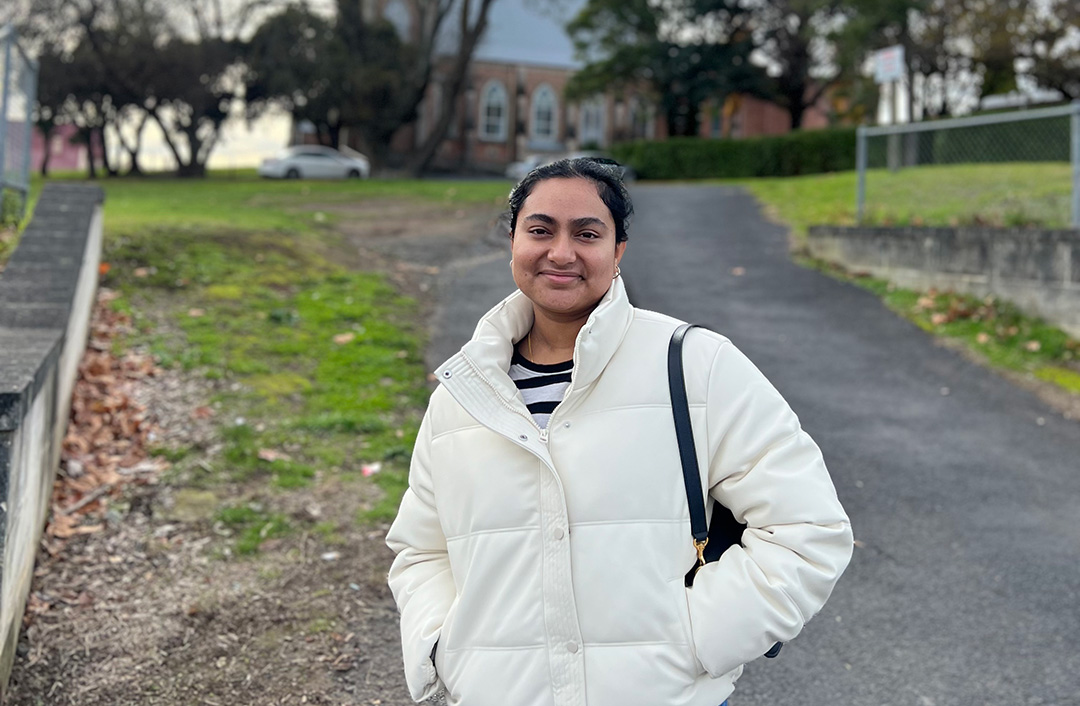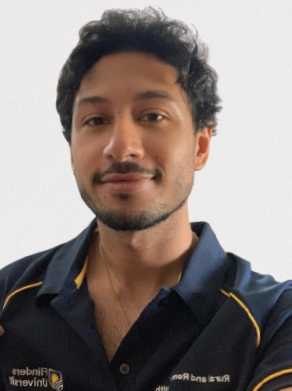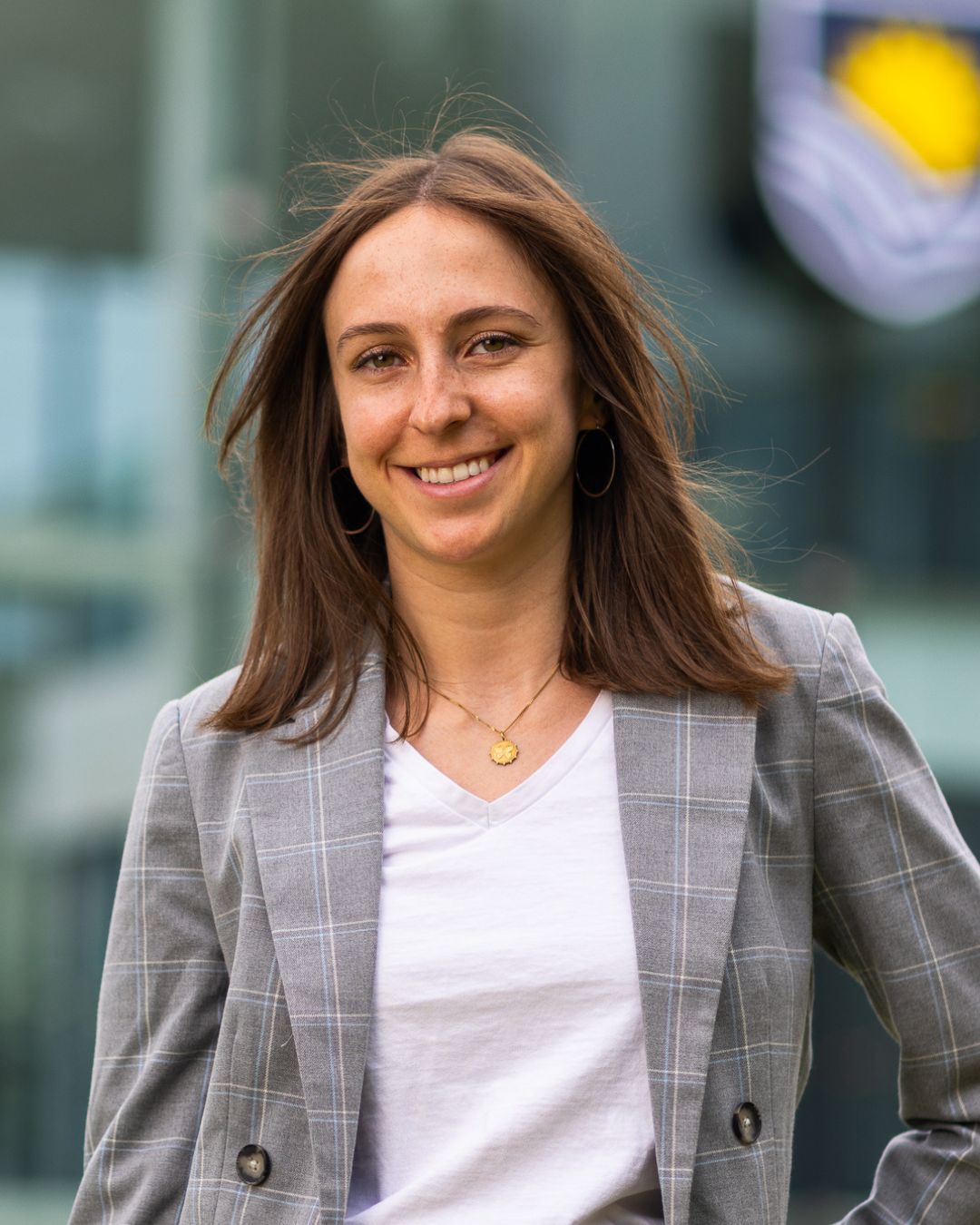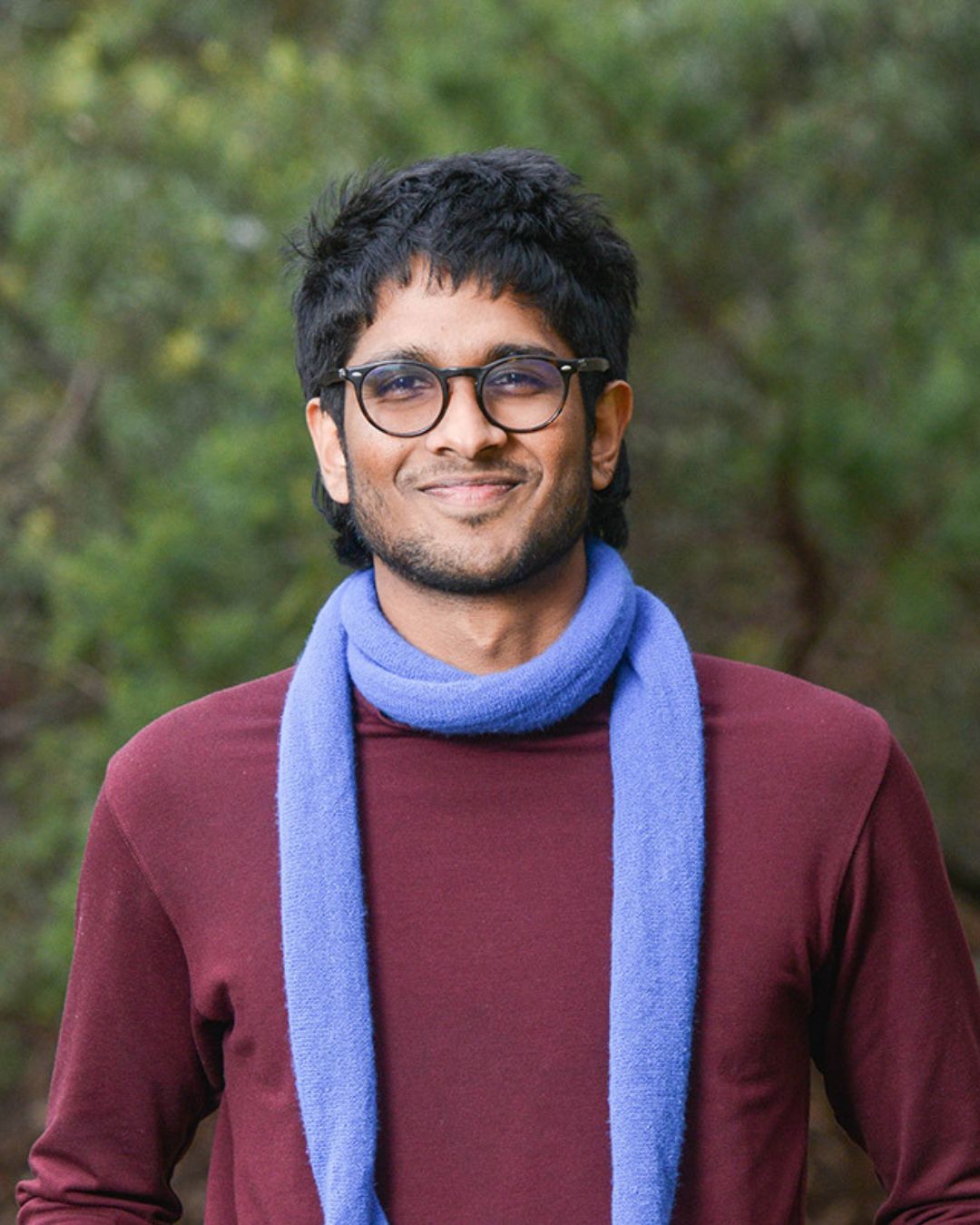

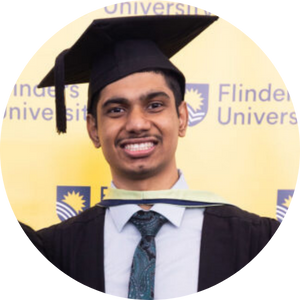
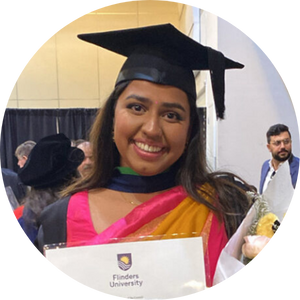
The staff do an outstanding job preparing us for the workforce. They’ve equipped us with the fundamental skills to become safe and competent doctors.
The Flinders Doctor of Medicine (MD) prepares graduates for medical practice through a connected program of scientific, clinical and professional learning. Delivered across metropolitan, regional, rural and remote healthcare settings, the degree provides experience with diverse communities and models of care.
With a strong focus on social accountability, Indigenous health and health equity, the program prepares future doctors to work respectfully with diverse communities and contribute to better health outcomes.
At Flinders, you can complete the Doctor of Medicine degree at Bedford Park or Darwin.
The Doctor of Medicine provides an integrated curriculum combining biomedical science, clinical practice, public health, research, and professional development across all four years of study, with a strong focus on the social determinants of health and equitable healthcare outcomes across diverse communities.
Learning is structured around key domains that support safe, ethical, culturally responsive, and evidence-based medical practice across diverse healthcare and community settings.
In this course you will develop knowledge and skills in biomedical science, clinical practice, public health, research and professional development.
Your learning will progress from foundational medical knowledge and early clinical skills to increasingly immersive patient care and clinical placements. The curriculum is organised around key areas of medical practice, including health and illness, the doctor–patient relationship, health and society, professionalism, leadership, science and scholarship.
Your first year introduces you to the foundations of medicine and what it means to become a doctor.
You’ll begin building your knowledge across clinical practice, health and illness, professionalism, leadership, health and society, and the important relationship between doctor and patient. You’ll also start developing the scientific thinking, communication skills and professional mindset that will support you throughout your medical journey.
In your second year, you’ll continue to deepen your understanding of health, illness and patient care while strengthening your clinical reasoning, communication and professional development.
You’ll explore the role of doctors within the broader health system and society, and begin to connect medical knowledge more closely with real-world patient experiences. You’ll also have the opportunity to explore research or coursework electives, allowing you to build skills in an area of interest.
Your third year is where your learning moves strongly into clinical practice.
Through work integrated learning and clinical placements in healthcare facilities, you’ll apply your knowledge in real healthcare settings and learn directly from clinicians, patients and health teams. This year helps you build confidence, practical capability and a deeper understanding of patient-centred care, while continuing to explore research or coursework electives.
Your final year prepares you for the transition from medical student to medical graduate.
Through further clinical placements in healthcare facilities, you’ll consolidate your medical knowledge, strengthen your decision-making and continue developing the professional skills needed for safe, effective and compassionate practice. This year is about bringing together everything you have learned as you prepare for the next stage of your career in medicine.
Gain hands-on experience in both community and hospital settings throughout your degree. You will learn across a broad range of healthcare environments, from primary care to tertiary services, building your understanding of clinical practice and performance through practical classes and clinical placements.
This course includes compulsory clinical placements designed to provide the workplace-based experience needed for professional practice. Before attending placement, you must meet the relevant State or Territory immunisation requirements, as well as any additional requirements set by individual placement providers.
After graduating, you must complete a year as a hospital intern to become eligible for medical registration with the Medical Board of Australia. Following internship, you may apply for specialist training through a specialist college after fulfilling their prescribed entry requirements.
Accreditation or Professional Recognition
The Flinders University Medical Program (MD) is accredited by the Australian Medical Council. Upon completion of the MD, graduates will be eligible to apply for provisional registration with the Medical Board of Australia as a medical practitioner. To qualify for registration with the Medical Board of Australia, on graduation you will need to complete a year as a hospital intern. Internship allocations in South Australia are managed by South Australian Medical Education and Training.
At Flinders university, we're addressing the health work force gap in rural and remote areas, by offering aspiring medical professionals the opportunity to study the Doctor of Medicine in Adelaide at Bedford Park, in Darwin through the Northern Territory Medical Program (NTMP), or in regional South Australia through the SA Rural Medical Program (SARM).
South Australia Rural Medical (SARM) Program
This program enables eligible students to complete all four years of the Flinders MD in rural South Australia. With up to 60 places available, the SARM Program gives students the opportunity to study medicine while building strong connections with rural communities and healthcare services. Priority entry conditions apply.
Northern Territory Medical Program (NTMP)
This program enables students to complete all four years of the Flinders MD in the Northern Territory. Students learn at sites across the Territory, gaining experience in metropolitan, regional and remote healthcare settings and developing an understanding of the needs of diverse Northern Territory communities. Priority entry conditions apply.
Health Professional roles are projected to grow by 28% by 2035, meaning your skills will be in incredibly high demand. With a Flinders Doctor of Medicine (MD) degree, it will prepare you for the realities of modern healthcare, with a focus on evidence-based practice, culturally responsive care and hands-on clinical learning.
Learn in real healthcare environments through placements with organisations such as the Southern Adelaide Local Health Network (SALHN), Northern Adelaide Local Health Network (NALHN), Royal Darwin Hospital, and regional health services. Partnerships like these, provide valuable exposure to diverse patient populations and clinical settings, helping you build practical skills, clinical confidence, and readiness for internship and future medical careers
Begin your journey to becoming a doctor with our six-year, accredited Bachelor of Clinical Sciences / Doctor of Medicine degree. This integrated program offers a seamless pathway from undergraduate study to becoming a qualified doctor in one transformative journey.
Broaden your impact with a combined Doctor of Medicine (MD)
At Flinders, our combined degree options allow you to broaden your expertise and create more opportunities beyond clinical practice alone.
Study the Doctor of Medicine alongside a Master of Public Health and build the knowledge to think beyond individual patient care. You will develop an understanding of prevention, policy and the broader factors that shape health outcomes, communities and healthcare systems.
Take the next step towards a career as a clinician scientist through a well-supported pathway that integrates PhD research with your Doctor of Medicine, preparing you for leadership in medicine, research and innovation.
Where world-class education meets laid-back coastal living. With pristine beaches, acclaimed wineries, and vibrant festivals at your doorstep, South Australia offers an unmatched student experience.
Photo credit: SATC
Our teaching and professional staff are experts in their fields and well-connected to the industry.
Doctor
Maxine Moore
MD Director (Student Support and Success)
Leads integrated student support and success systems that foster wellbeing, self-regulation, and readiness for professional practice.
Professor
Helen Anscomb
MD Director (Science and Scholarship)
Leads foundational science, research literacy, and scholarship across early MD years.
Professor
Savio Barreto
MD Director (Clinical Placements)
Oversees clinical training, placements, and real-world healthcare learning experiences.
Associate Professor
James Padley
SARM Program Lead
Medical education and program leadership in the South Australia Rural Medical (SARM) Program
Associate Professor
Emma Kennedy
Director, Northern Territory Medical Program (NTMP)
Responsible for the delivery of the Flinders MD Program in the NT.
Doctor of Medicine, Northern Territory Medical Program
Doctor of Medicine
Doctor of Medicine (SA Rural Medical Program)
Doctor of Medicine, Northern Territory Medical Program
Doctor of Medicine
Doctor of Medicine (SA Rural Medical Program)
Kameel's Experience Studying Doctor of Medicine in the Northern Territory, Australia
Canadian student, Kameel, shares how hands-on placements, real-world learning opportunities, and meaningful community connections in Darwin have helped him grow both personally and professionally.
Study Medicine at Flinders: Meet Cassidy
Meet Cassidy, a Canadian international student who is chasing her dream of becoming a doctor at Flinders University in Adelaide, Australia. From choosing Flinders for its world-class medical program to discovering the welcoming, vibrant community in Adelaide - hear firsthand what it’s like to study medicine at Flinders.
Doctor of Medicine (Darwin)
Doctor of Medicine
Doctor of Medicine
Doctor of Medicine (Darwin)
Doctor of Medicine
Doctor of Medicine
International Student Services (ISS) is the first point of contact for international student support. The university also offers everything from cultural, health, and wellbeing services, to academic support.
Take a virtual tour of our campuses, guided by your fellow international students.
Flinders University Student Association (FUSA) is the heart of the Flinders Experience. FUSA is where you'll find out about events, club memberships, and extracurricular activities.
Adelaide has many accommodation options for international students. You can choose to live on campus, at our city accommodation provider The Switch, or in rental accommodation.
From course advice, recognition of prior learning assessments, to study skills and financial support, we’re here to help.
Connect with Flinders alumni and industry partners through discipline-specific networks, seminars, and career events designed for postgraduate students.
Flinders’ campuses are hubs of activity, with library spaces, study and chill areas, ample parking and more.
Find the answers to some of our most frequently asked questions.
You must hold a completed bachelor's degree, or be due to complete your most recent bachelor's degree before the course commences. There is no requirement for a specific undergraduate discipline.
Applicants must normally achieve a minimum Flinders equivalent non-weighted GPA of 5.00 or higher. Your GPA is calculated using your most recent bachelor's degree and can be checked using the Flinders GPA calculator.
If you are a domestic non IES student, yes. You must hold a valid GAMSAT result with a minimum score of 50 in each section. GAMSAT results must have been obtained within the last four years to be eligible.
Selection is based on a combined assessment of your GAMSAT score, weighted GPA from your most recent bachelor's degree, and interview performance. Applicants are shortlisted for interview based on their overall GAMSAT score, provided minimum section scores are met.
Shortlisted applicants are invited to interview as part of the final selection stage, with interviews typically held between late September and early October. The interview assesses attributes considered essential for the study and practice of medicine, such as communication skills, ethical reasoning, motivation for a medical career, and the ability to reflect on personal experiences. Final offers are made by combining interview performance with academic results and GAMSAT scores, as detailed in the Doctor of Medicine Application Guide.
No. A minimum of 25% of places are reserved for graduates from other universities, while up to 75% are available to Flinders graduates. Both Flinders and non-Flinders applicants are encouraged to apply.
Yes. A reserved sub-quota is available for graduates of selected Flinders degrees, including Medical Science, Paramedicine, and Public Health, subject to eligibility requirements.
Flinders offers dedicated pathways through the Aboriginal and/or Torres Strait Islander Sub-quota and the Indigenous Entry Stream. These pathways recognise Indigenous knowledge and aim to increase Indigenous participation in medicine, with tailored entry requirements and support
The Bonded Medical Program offers a Commonwealth Supported Place in return for a commitment to work in eligible regional, rural, or remote areas after graduation. Applicants should seek independent advice before opting into this pathway.
Yes. The South Australia Rural Medical (SARM) Program offers a fully rural-based pathway, with study and placements across regional South Australia. Priority is given to applicants with rural backgrounds, Aboriginal and/or Torres Strait Islander applicants, and those committed to rural practice.
Yes. All applicants must meet the inherent requirements for studying medicine. Inherent requirements are the essential abilities, attributes and skills needed to complete the course and practise safely and effectively as a medical student and future doctor. These requirements relate to professional behaviour, communication, cognition, and physical and mental capacity, and are defined by the Medical Deans of Australia and New Zealand.
Unable to find your answers?
Find the answers to some of our most frequently asked questions.
The type of documents you will need for your international application depends on what course you are applying for and which country you are a citizen of. Course requirements are stated on each course webpage. Examples of documentation you might expect to provide for your international application include a copy of personal identification, academic transcripts or a resume.
Once you have received your Confirmation of Enrolment (CoE) letter from Flinders University, you should apply for your visa as soon as possible as visa processing times can vary. You will receive your CoE letter after you have applied to study at Flinders, accepted your offer and paid the semester tuition fee.
No. Part-time study is currently not available for international students due to visa conditions.
No. Online study is currently not available for international students due to visa conditions.
If you don’t meet our English language or academic entry requirements, you can still gain entry to Flinders University through our on-campus pathway provider Flinders University Academy. Alternatively, you can improve your English language proficiency through our approved English Language Instruction Course for Overseas Students (ELICOS) providers.
You can apply to study as an international student directly through Flinders University or an authorised agent in your country.
If you are from one of the countries listed here, you are required to apply via an education agent. If you reside onshore in Australia, you will not require an agent even if you are from the countries listed above.
Yes. As a student visa (subclass 500) holder, you and your dependents (family members) can work up to 48 hours a fortnight when your course of study is in session. If you have started a master degree by research or doctoral degree, this rule does not apply to you and working hours are not restricted.
Our dedicated International Student Services (ISS) team provide a range of programs supporting your enrolment, study and social life, as well as a referral service to facilities on campus and within the local community.
Unable to find answers? Get in touch with us.
Applicants must:
Additional requirements apply for sub-quotas such as submitting Statutory Declaration forms, supporting letters etc. which are detailed in the sub-quota information below.
Selection is based on combining the scores for the GAMSAT, weighted Grade Point Average from the most recent Bachelor degree and interview score.
Applicants are ranked to be shortlisted for an interview on the basis of their overall GAMSAT score provided they meet the minimum in each section of the test.
To maximise chances of gaining entry to the Doctor of Medicine you need to:
Eligible applicants must have successfully completed the GAMSAT in the last four years, and hold a bachelor’s degree or equivalent.
We support the Commonwealth and Northern Territory Governments’ key priority to increase the participation of Aboriginal and/or Torres Strait Islander people in medicine.
We are committed to equity and inclusiveness in the Doctor of Medicine. Flinders recognises and values the contribution that Indigenous knowledge and Indigenous doctors make to the health of our country. Our Indigenous and non-Indigenous staff teach you how to work safely and confidently in a multicultural society.
As an Aboriginal and/or Torres Strait Islander applicant you can choose from two pathways into the Doctor of Medicine.
If you have an undergraduate degree but do not have a valid GAMSAT score, you can apply for entry into the Indigenous Entry Stream (IES). Alternatively, if you do have a valid GAMSAT score you can apply for direct entry through the Aboriginal and/or Torres Strait Islander Sub-quota.
Both pathways have different timelines and requirements.
Aboriginal and/or Torres Strait Islander applicants may confirm their Aboriginal and/or Torres Strait Islander identity in one of two ways:
Confirmation of Indigeneity - provide a formal document, confirming their Indigeneity, from an incorporated Aboriginal or Torres Strait Islander organisation, containing the Common Seal of the organisation.
Or
Affirmation of Indigeneity - when a document under Common Seal is not able to be obtained, applicants may submit an Aboriginal and/or Torres Strait Islander descent Statutory Declaration.
Up to 4 places are available for applicants who currently hold or have held a Humanitarian Visa issued by the Australian Government and are permanent residents or citizens of Australia.
Applicants must submit a Permanent Humanitarian Visa Holder Statutory Declaration.pdf and a certified copy of their original Humanitarian Visa.
A minimum 25% of total places available are reserved for Non-Flinders University Graduates.
Applicants whose most recent Bachelor degree is not from Flinders University will be considered under this sub-quota.
A maximum 75% of total places are available for Flinders graduates of either their most recent completed Bachelor degree or any postgraduate study.
A maximum 30% (of the 75%) of places are available for Flinders graduates whose most recent Bachelor degree is one of the following:
The remaining 45% (of the 75%) are normally available for graduates of any other Flinders Bachelor degree.
There are two types of places offered within the MD degree in Adelaide. These are Non Bonded Commonwealth Supported Places and Bonded Commonwealth Supported Places.
The Bonded Medical Program provides students with a Commonwealth Supported Place (CSP) in a medical course at an Australian university in return for a commitment to work in eligible regional, rural and remote areas for a specified period after completion of their medical course. This commitment is referred to as a Return of Service Obligation (RoSO).
Participants of the Bonded Medical Program are subject to Part VD of the Health Insurance Act 1973 (Act) and must abide by the Health Insurance (Bonded Medical Program) Rule 2020 (Rule).
Students should obtain independent legal advice before agreeing to opt in to the Program.
SARM Program will be offered entirely in rural South Australia for aspiring rural medical professionals.
Priority admission is for residents of rural South Australia, Aboriginal and/or Torres Strait Islander applicants and applicants from interstate with rural backgrounds. Applicants from non-rural backgrounds who wish to pursue a career in rural medicine are also encouraged to apply.
Students will live and study Years 1 and 2 of the MD in the Riverland or Mount Gambier in the Greater Green Triangle (GGT). Later, in Years 3 and 4, students will study in either the Hills Mallee Fleurieu, Barossa Valley, Riverland or GGT.
With up to 60 places available, the SARM Program is a gateway to a fulfilling rural medical career.
The MD is also offered in Darwin, Northern Territory.
Places (Employer Reserved – Fee Paying) are funded by the NT Government. The NTBMS is an NT and Australia Government initiative with the aims of improving the health of all Northern Territorians, particularly Aboriginal and/or Torres Strait Islander Territorians, increasing the number of Aboriginal and Torres Strait Island doctors and to provide a sustainable supply of medical graduates to the NT health community.
The NTMP considers applicants who meet the eligibility criteria in the following priority order:
Aboriginal and/or Torres Strait Islander applicants may confirm their Aboriginal and/or Torres Strait Islander identity in one of two ways:
Confirmation of Indigeneity - provide a formal document, confirming their Indigeneity, from an incorporated Aboriginal or Torres Strait Islander organisation, containing the Common Seal of the organisation.
Or
Affirmation of Indigeneity - when a document under Common Seal is not able to be obtained, applicants may submit an Aboriginal and/or Torres Strait Islander descent Statutory Declaration.
Applicants who are NT residents are required to submit a Northern Territory Residency Statutory Declaration and supporting letter(s) confirming they meet the NT residency criteria.
Prospective applicants are referred to the inherent requirements for studying medicine at Flinders University (reproduced from the Medical Deans of Australian and New Zealand (MDANZ) document " Inherent requirements for studying Medicine in Australia and New Zealand", 2017), and the Australian Medical Board’s Good medical practice code of conduct.
Register to sit GAMSAT (the Graduate Medical Schools Admissions Test).
GAMSAT is held in March each year and results are released in May each year.
2026 entry GAMSAT overall score cut-offs for interview^
SARM program - GAMSAT not published as selection is also based on priorities
NTMP - GAMSAT not published as selection is also based on priorities
^Cut-offs are based on the main round of interview offers. If further offers to interview are made the cut-offs will be updated.
You MUST read and understand the Doctor of Medicine Application Guide.
This is crucial for domestic applicants and forms part of the application process.
Take note of key dates and deadlines to be considered for entry.
2027 entry*
Application Guide published
Monday 11 May 2026
Applications open
Monday 18 May 2026 (9:00am)
Applications close
Monday 27 July 11:59pm (ACST) (extended from Monday 20 July)
Deadline for payment of application
Monday 27 July 2026 11:59pm (ACST) (extended from Monday 20 July)
Instructions to upload Statutory Declarations, Official Academic Transcript(s) and/or supporting letter(s)/documents after closing date
Applicants will be emailed from Friday 7 August confirming when they will be able to upload these to their application if not provided at the time of submission. Extended from 31 July 2026.
Deadline to submit Statutory Declaration(s), Official Academic Transcripts and supporting letter(s)/documents
Friday 14th August. Extended from Thursday 31 July 2026.
Applicants shortlisted for interviews notified
From late August to mid September 2026
Interviews
Monday 21 September to Friday 2 October 2026 for SA
Monday 21 to Thursday 24 September 2026 for NT
Offers
Offers are normally made from late October and may be made right up until the commencement of the MD in February 2027 to fill places available.
*Timeline is subject to change
Apply online.
If you don’t meet our English language entry requirements and need to improve your English language proficiency, you can do so through our approved English Language Instruction Course for Overseas Students (ELICOS) providers.
Please note, a test is required as evidence of English language proficiency even if an English language program has been completed. Tests accepted are Academic IELTS, TOEFL iBT, PTE Academic, and OET.
If you don’t meet our academic entry requirements, you can still gain entry to Flinders University through Flinders University Academy. With a range of diplomas, foundation and English language courses, students can find a direct pathway into the destination degree of their choice.
Select your course.
Check entry requirements.
Check your eligibility for credit.
Before applying, you must download and read the Doctor of Medicine Application Guide for international applicants.
Check application timelines.
Obtain certified documents.
Submit your application and documents.
Follow up our step-by-step guide to help you with your application to study at Flinders.
Our registered education agents around the world understand the university system and will guide you through the application process.
Get in touch with our team to discuss your preferences, career options, pathways, and course and entry requirements. We are here to ensure you have everything you need to choose the right degree for you.
If you lack required English proficiency, improve through Flinders University Academy or approved ELICOS providers for direct university entry without IELTS/TOEFL tests.
If you do not meet entry requirements for your desired degree, Flinders University Academy will provide you with a direct pathway into the destination degree of your choice.
Sturt Rd, Bedford Park
South Australia 5042
South Australia | Northern Territory
Global | Online
CRICOS Provider: 00114A TEQSA Provider ID: PRV12097 TEQSA category: Australian University
Flinders University uses cookies to ensure website functionality, personalisation and a variety of purposes as set out in its website privacy statement. This statement explains cookies and their use by Flinders.
If you consent to the use of our cookies then please click the button below:
If you do not consent to the use of all our cookies then please click the button below. Clicking this button will result in all cookies being rejected except for those that are required for essential functionality on our website.